

Happiness in the Age of Social Media
Over the past decade, social media has become a big part of our daily lives. Platforms like Instagram, Facebook, and X have changed the way we talk to each other, share our experiences, and even how we see ourselves. While social media helps people stay connected and express themselves, psychologists have started to look closely at how it affects our happiness and mental well-being.
To understand this better, it is important to look at the psychological reasons behind how we use social media and how it shapes the way we feel.
Social Connection & Well-Being
Human beings naturally want to feel connected to others. We all need friendships, conversations, and a sense of belonging. Social media can help fulfill this need because it allows people to stay in touch even when they are far apart. For example, people can share life updates, celebrate achievements, or support friends during difficult times. In many cases, social media helps people maintain relationships that might otherwise fade away due to distance or busy schedules.
Online communities can also be helpful. Many people find groups where they can talk about their interests, hobbies, or personal experiences. Being part of these communities can make people feel understood and accepted. When social media is used in this way—to build real connections—it can actually improve emotional well-being.
The Problem of Comparing Ourselves to Others
However, social media also has a downside. One of the biggest issues is the tendency to compare ourselves with others. Psychologists explain this through something called Social Comparison Theory, which means that people naturally compare their lives with those around them to understand their own success or progress.
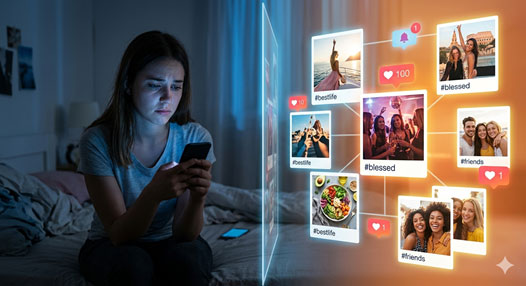
On social media, we mostly see the best moments of people’s lives—vacations, achievements, celebrations, and carefully edited photos. What we usually don’t see are the everyday struggles, disappointments, or ordinary moments. Because of this, it is easy to start feeling like everyone else is happier, more successful, or living a better life. Over time, these comparisons can make people feel less confident or dissatisfied with their own lives.
The Need for Likes & Approval
Another psychological factor connected to social media is the need for validation. Many people start paying a lot of attention to numbers such as likes, comments, and followers. These numbers can begin to feel like a measure of how much others approve of us.
When someone’s sense of self-worth becomes tied to these numbers, their mood can start to depend on online reactions. If a post gets a lot of likes, they may feel happy and confident. If it doesn’t get much attention, they might feel disappointed or question themselves. This can create a cycle where people constantly look for approval online instead of expressing themselves naturally.
Too Much Social Media & Mental Fatigue
Spending too much time on social media can also lead to mental exhaustion. Our phones constantly send notifications, updates, and new content. This endless flow of information can make it hard for the brain to relax. Over time, this may reduce our attention span and increase feelings of stress or emotional fatigue.
Another problem is that too much time online can reduce time spent in the real world. Face-to-face conversations, outdoor activities, hobbies, and quiet moments are important for emotional balance. Without these, people may feel more drained or disconnected.
Using Social Media in a Healthy Way
The solution is not necessarily to stop using social media completely. Instead, psychologists suggest learning to use it in a more mindful and balanced way.
Some helpful habits include:
- Setting limits on daily screen time
- Following content that inspires learning, positivity, or meaningful conversations
- Avoiding constant comparison with other people’s online lives
- Spending quality time with friends and family in real life
- Paying attention to how social media affects your mood
These small changes can help people stay in control of their digital habits instead of letting social media control them.
Happiness in the age of social media largely depends on the way we choose to use it. When used mindfully and in moderation, these platforms can add value to our lives by helping us stay connected and informed. However, real happiness does not come from screens or online approval. It grows from genuine relationships, accepting who we are, and enjoying meaningful experiences in the real world.

